
Reviewed · GARNI, GEGHARD & SYMPHONY OF STONES DAY TRIPS
Private 8-9-hour Echmiadzin, Zvartnots, Garni and Geghard trip from Yerevan
Four ancient stops, one efficient day.
This private tour is a smart way to hit Armenia’s big spiritual and architectural sites without juggling transport. I like the hassle-free hotel pickup and drop-off in Yerevan, and I also like that you can add a professional English or Russian guide to turn each church ruin into a story you can actually picture. The one thing to plan for: reconstruction at Etchmiadzin may mean you only see the Mother Cathedral from the outside, and the day can feel slow if roads and traffic run long.
Key details make the experience easier. You travel in an air-conditioned vehicle with bottled water, and it’s run as a small private group (up to 3), so timing stays reasonable. For me, the best part is how the sites connect through architecture—cross-cupola, columned temple design, and rock-carved churches—so the day doesn’t feel like a checklist.
If you hate waiting, treat the schedule like a guideline. Heavy traffic and some rough stretches between Yerevan and the sites can stretch the feeling of the day, even though the stops themselves are well worth it.
In This Review
- The core idea: a private UNESCO day with real context
- What makes it special: the 5 things I’d watch for
- Price and value: what $123.30 for up to 3 really buys
- Getting picked up in Yerevan without the headache
- Etchmiadzin Monastery: the first Christian church and an outside-only moment
- St. Hripsime Church: cross-cupola architecture and the martyr’s tomb
- Zvartnots Temple ruins: columns, reconstruction, and Toros Toramanyan’s model
- Garni Temple: Greco-Roman Armenian style and the sun-god angle
- Geghard Monastery: churches carved into rock and khachkars everywhere
- Timing reality: a full day, plus traffic between sites
- Lunch plan: you’ll likely want to decide ahead
- Who this tour suits best
- Should you book this private Echmiadzin–Zvartnots–Garni–Geghard day?
- FAQ
- How long is the private tour?
- Is pickup and drop-off included?
- Is there an option for a guide?
- What sites do we visit?
- Are entrance fees included?
- Is lunch provided?
- What about the Etchmiadzin Mother Cathedral area?
- What if the weather is poor?
The core idea: a private UNESCO day with real context

This trip is built for people who want the classics—Etchmiadzin, Zvartnots, Garni, and Geghard—but also want explanations that help the buildings make sense. With a guide option, you’re not just staring at stone. You’re learning what the shapes mean and why the places matter.
You’ll also appreciate the pacing. It’s long enough to feel like a full day, but each stop has a focused window so you can actually see details without feeling rushed out the door.
What makes it special: the 5 things I’d watch for
- Private pickup and drop-off inside Yerevan: No complicated meeting points or extra taxi math.
- Air-conditioned comfort + bottled water: Your day stays calmer, especially during warm or dusty stretches.
- UNESCO-packed route: Etchmiadzin, Hripsime, Zvartnots, and Geghard keep the day grounded in big heritage.
- Architectural themes that connect: cross-cupola design, 7th-century temple engineering, and rock-carving in one loop.
- A practical heads-up about Etchmiadzin: reconstruction can limit you to the Mother Cathedral exterior.
More Garni and Geghard runs with the Symphony of Stones from Yerevan
- Group Tour: Garni, Symphony of Stones, Geghard, Lavash Baking
★ 5.0 · 1,042 reviews - Yerevan: Garni, Geghard, Symphony of Stones & Lavash Baking
★ 5.0 · 589 reviews - Group Tour: Garni pagan temple, Geghard monastery, Lake Sevan, Sevanavank
★ 5.0 · 430 reviews - Group Tour: Khor Virap, Garni temple, Geghard, Lavash baking
★ 5.0 · 333 reviews
Price and value: what $123.30 for up to 3 really buys
This tour lists at $123.30 per group (up to 3) for an 8 to 9 hour day. That group structure is where the value usually kicks in. If you’re traveling with a partner or a friend, the cost per person can drop fast compared with splitting transport and paying for separate tickets.
That said, the day is not totally all-inclusive. You should budget for entrance fees at Garni and Zvartnots (listed as 2800 AMD, about $7.30 per person). Other stops are shown as free on the day plan, including Etchmiadzin, St. Hripsime, and Geghard.
So the real math is simple:
- You pay a single group rate for guide/vehicle/pickup.
- You pay site entrance fees only where they apply (Garni and Zvartnots).
If you like the idea of a guided day but don’t want to pay for a huge multi-stop bus full of strangers, this private format is a good fit.
Getting picked up in Yerevan without the headache
The tour starts with free pickup and drop-off within Yerevan, and it’s set up as a private experience, meaning it’s just your group. That matters because it reduces friction—no lining up with other groups, no wandering around trying to find the right shuttle.
You travel in an air-conditioned vehicle with professional drivers and vehicle/passenger insurance. You also get a mobile ticket, which is handy if you like going paper-light.
If you choose the option with a guide, you’ll get an English or Russian speaking guide. The guide is not just there for names and dates. The best part is that they help you read the architecture—what you’re looking at and why it was built that way.
And yes, driver-guide teamwork is clearly part of the package. On this route, strong pairs like Nelly with Hamik, or Gayane with Gojur, are the kind of combinations that keep the day moving while still feeling informative.
Etchmiadzin Monastery: the first Christian church and an outside-only moment
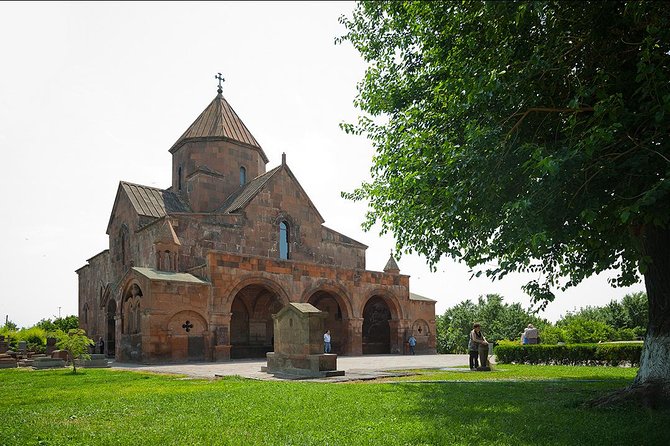
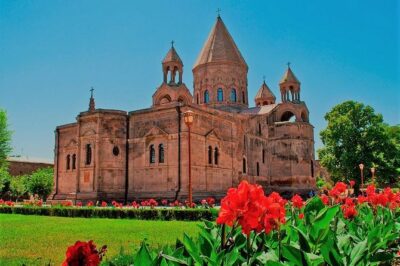
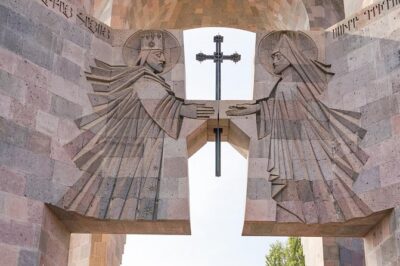
Etchmiadzin is the first Christian church in the world (as presented in this day plan), and it’s also a UNESCO heritage site. It carries a heavyweight spiritual reputation, but the practical reality today is that some parts may be under reconstruction.
In particular, you might be able to see the Mother Cathedral only from the outside. That’s the main drawback to keep in mind. If you came hoping for every interior view, plan mentally for a “look close, then move on” style visit.
Still, even an exterior-focused stop can be meaningful if you pay attention to form and setting. The point is not only to see a landmark; it’s to understand where this faith tradition anchored itself early on and how that shapes what you see across Armenia later in the day.
Time on site is about 1 hour, which is usually enough to take in the grounds, absorb the guide’s context, and get a few solid photos without rushing.
More Echmiadzin and Zvartnots cathedral tours from Yerevan
St. Hripsime Church: cross-cupola architecture and the martyr’s tomb
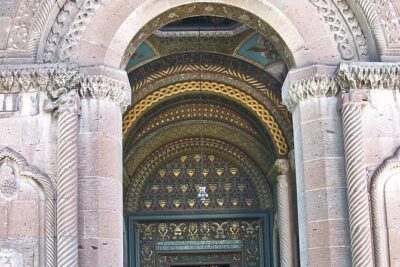
Next comes St. Hripsime Church, another UNESCO-listed site. This stop leans hard into architecture. The day plan frames it as a developed example of cross-cupola churches in Armenia, with architectural simplicity and a feeling of loftiness.
You also get a direct spiritual link at the site: the tomb of the Christian martyr Virgin Hripsime is located in the sacristy. That’s the kind of detail that makes a stop feel personal. Instead of wandering around stone, you’re anchoring the building to a person and a story.
Expect around 40 minutes here. That’s a workable window for exterior appreciation, interior awareness (as allowed on the day), and enough time for the guide to explain what makes this design distinct.
Zvartnots Temple ruins: columns, reconstruction, and Toros Toramanyan’s model
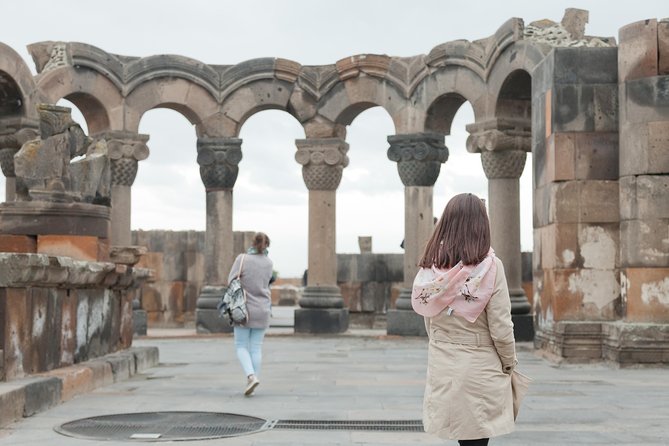
Then you reach Zvartnots, presented as a 7th-century masterpiece of Armenian architectural skill. The story here is part engineering, part imagination.
The day plan highlights a key detail: the temple was built on columns and survived only until the 10th century. Since you’re visiting ruins and remnants, what you learn becomes just as important as what you see.
One of the most interesting parts is the reconstruction model designed by Toros Toramanyan. The day plan notes that some specialists struggled to accept the possibility of rebuilding something so huge and complex based on available evidence. The turning point came from a comparison to a bas-relief associated with St. Chapelle in Paris, which depicts Zvartnots-like forms.
In other words: this stop is a lesson in how historians try to rebuild the past from clues. It’s not only archaeology. It’s architectural reasoning.
Time here is about 40 minutes. It’s enough to look, then listen, then look again with a clearer mental picture. Budget time to slow down, because ruins can be hard to read quickly unless your guide helps translate shapes into meaning.
Garni Temple: Greco-Roman Armenian style and the sun-god angle
Garni is one of those stops that changes your mood in a good way. Instead of focusing only on Christian heritage, you shift to the pagan past.
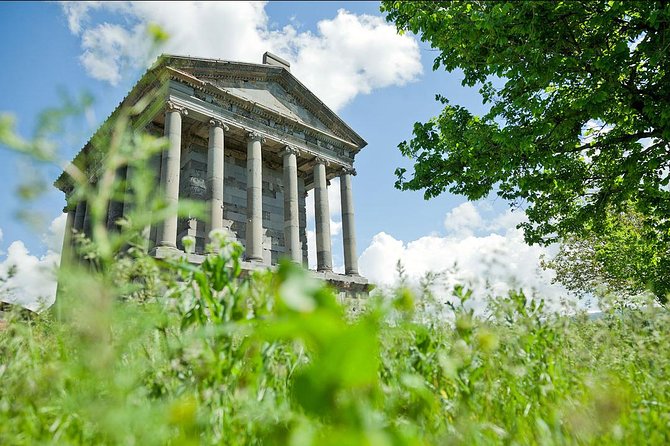
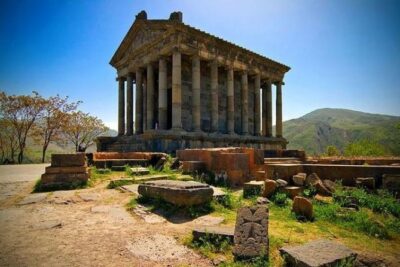
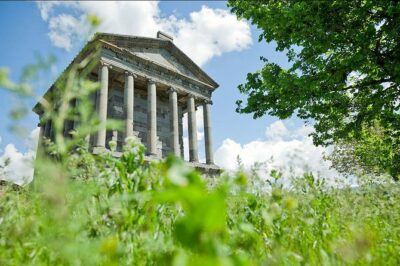
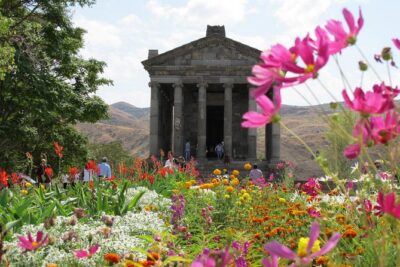
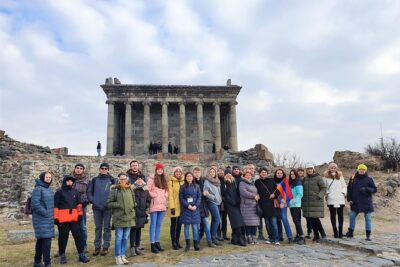
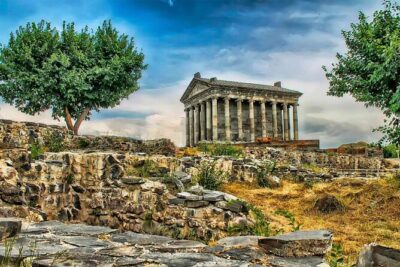
This is described as the unique surviving example of heathen culture in Armenia, mixing Greco-Roman and Armenian styles. The day plan also ties it to a specific ruler and belief system: King Trdat the First ordered the building in the 1st century AD, dedicated to the God of Sun.
Then comes the big historical pivot. After Christianity in 301, the pagan temple lost significance, and the fortress of Garni became a summer residence for kings. Nearby you’ll find ruins of the royal palace and the bathroom with stunning mosaic work.
Time on site is about 1 hour, and it’s usually the kind of stop where you’ll appreciate a guide’s notes on how Greco-Roman forms were adapted locally. Also, plan for photos: the temple towers over a triangular cape and the setting helps make the stone feel monumental.
Entrance fees for Garni are listed as not included, so factor that into your day cost. Still, it’s worth doing because it adds contrast to the church-heavy route.
Geghard Monastery: churches carved into rock and khachkars everywhere
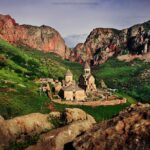
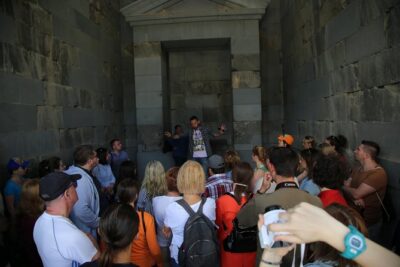
Geghard is the emotional highlight for many people because the architecture feels dramatic even when you’re not religious. The day plan calls it a 13th-century Armenian architecture masterpiece, rich in subtle sculptural detail and lots of khachkars (cross-stones).
The standout description is about the rock. Some churches of the complex are masterfully hewn in a huge rock. If you like buildings that feel like they grew out of the landscape, this is your stop.
There’s also a name-and-meaning layer. The complex was originally called Ayrivank, or cave monastery. Later it became Geghard, or lance, linked to a centuries-old belief that the lance used by a Roman soldier to sting Jesus Christ’s side was kept there.
The day plan also notes it’s one of the best places for singing spiritual songs, which hints at the acoustics and atmosphere of the site. Even if you don’t hear songs directly, you’ll feel why people associate the place with sound.
Time here is about 1 hour, and that’s usually enough to see several carved areas and stop at key khachkars without sprinting.
Entrance is listed as free on the day plan, which helps keep Geghard affordable.
Timing reality: a full day, plus traffic between sites
This is an 8 to 9 hour experience. That sounds fixed, but what you’ll feel is the balance between driving time and viewing time.
Armenian roads vary. Even with a capable driver, the day can slow down if traffic and road conditions are rough. One of the best pieces of advice I can give is to treat the schedule like this: the viewing windows are designed for meaning, but the in-between stretches are part of the experience too. You’ll see the country change from city to temple sites on the edge of history.
If you really want to maximize time on the ground, choose a guide option that explains the architecture as you travel. That way, even the car time doesn’t feel wasted.
Lunch plan: you’ll likely want to decide ahead
Lunch is not included. So you’ll need to handle it yourself, or ask the guide for help finding something practical. On this route, strong guide-driver teams have offered excellent lunch options.
Because you’re in a private setting, you can usually adapt to your preferences: lighter meal, local restaurant, or something simpler. Bring a little patience and a little appetite planning.
Who this tour suits best
This private loop is a good match if you want:
- UNESCO sites in one day without complicated logistics.
- Architecture-focused explanations, not just photos.
- A calmer day with pickup and drop-off handled.
- Comfort in an air-conditioned vehicle.
It’s also a strong choice if you’re traveling as a couple or small group, since the price is per group up to 3.
If you’re the type who only wants Christian interiors and you’re strict about seeing interiors at Etchmiadzin, remember the possible reconstruction exterior-only view. Also, if you hate all traffic delays, keep expectations flexible.
Should you book this private Echmiadzin–Zvartnots–Garni–Geghard day?
I’d book it if you want one day in Armenia that hits the big landmarks and still feels organized. The value is strongest for small groups, and the combination of pickup, vehicle comfort, and optional guide turns a long day into something you can actually enjoy.
The main reason not to book is simple: if you’re hoping for guaranteed interior access at every stop, the Etchmiadzin Mother Cathedral exterior-only possibility is a real consideration. The other practical point is cost for Garni and Zvartnots entrances, plus lunch.
If you can live with those two points, you’re set up for a memorable day—especially if you like understanding why these buildings were made, and how Armenian architecture developed its own identity across centuries.
FAQ
How long is the private tour?
The tour runs about 8 to 9 hours.
Is pickup and drop-off included?
Yes. The tour includes free pickup and drop-off within Yerevan. You share your pickup address.
Is there an option for a guide?
Yes. You can choose a professional English or Russian speaking guide.
What sites do we visit?
You’ll go to Etchmiadzin Monastery, St. Hripsime Church, Zvartnots Temple, Garni Temple, and Geghard Monastery.
Are entrance fees included?
Etchmiadzin, St. Hripsime, and Geghard are listed as free on the day plan. Garni and Zvartnots entrance fees are listed as not included (2800 AMD, about $7.30 per person).
Is lunch provided?
No. Lunch is not included.
What about the Etchmiadzin Mother Cathedral area?
Due to reconstruction works, you may see the Mother Cathedral only from outside.
What if the weather is poor?
This experience requires good weather. If it’s canceled due to poor weather, you’ll be offered a different date or a full refund.
More Tour Reviews in Yerevan
- Group Tour: Garni, Symphony of Stones, Geghard, Lavash Baking★ 5.0 · 1,042 reviews
- Group Tour: Lake Sevan (Sevanavank), Dilijan (Goshavank, Haghartsin)★ 5.0 · 1,036 reviews
- Group tour: Khor Virap, Noravank, Areni Winery and Cave★ 5.0 · 651 reviews
- Yerevan: Garni, Geghard, Symphony of Stones & Lavash Baking★ 5.0 · 589 reviews
- Group Tour: Tsaghkadzor (Kecharis, Ropeway), Lake Sevan, Trout barbecue treat★ 5.0 · 511 reviews
More Echmiadzin & Zvartnots Cathedral Tours
- Group Tour: Echmiadzin Cathedral & churches, Zvartnots Temple★ 5.0 · 352 reviews
- Private Half-day Echmiadzin Cathedral, Hripsime & Zvartnots Temple from Yerevan★ 5.0 · 95 reviews
- Private tour to Echmiadzin (st Cathedral), Zvartnots, Khor Virap, Garni, Geghard★ 5.0 · 67 reviews
- Khor Virap, Echmiadzin & Zvartnots UNESCO Small-Group Guided Tour★ 5.0 · 40 reviews
- Garni, Geghard, Echmiadzin and Zvartnots Private Tour★ 5.0 · 23 reviews
More Garni, Geghard & Symphony of Stones Trips
- Group Tour: Garni, Symphony of Stones, Geghard, Lavash Baking★ 5.0 · 1,042 reviews
- Yerevan: Garni, Geghard, Symphony of Stones & Lavash Baking★ 5.0 · 589 reviews
- Group Tour: Garni pagan temple, Geghard monastery, Lake Sevan, Sevanavank★ 5.0 · 430 reviews
- Group Tour: Khor Virap, Garni temple, Geghard, Lavash baking★ 5.0 · 333 reviews
- Private 7-8-hour Khor Virap, Garni temple & Geghard monastery trip from Yerevan★ 5.0 · 272 reviews
Still deciding? Here are more Yerevan tours and Armenia day trips we have written up






Garni, Geghard & Symphony of Stones Day Trips, compared.
 ★ 5.0Group Tour: Garni, Symphony of Stones, Geghard, Lavash BakingFrom $281,042 reviews
 ★ 5.0Garni, Geghard, Symphony of Stones & Lavash BakingFrom $23589 reviews
 ★ 5.0Group Tour: Garni pagan temple, Geghard monastery, Lake Sevan, SevanavankFrom $41430 reviews
 ★ 5.0Group Tour: Khor Virap, Garni temple, Geghard, Lavash bakingFrom $38333 reviews
 ★ 5.0Private 7-8-hour Khor Virap, Garni temple & Geghard monastery trip from YerevanFrom $120272 reviews
 ★ 5.0Garni, Geghard & Symphony Small-Group Day Trip with Lavash BakingFrom $26263 reviews
 ★ 5.0Private Half-Day Garni Temple and Geghard Monastery Tour from YerevanFrom $89245 reviews
 ★ 5.0Private 7-8 hour Trip to Garni – Geghard – Lake Sevan – Sevanavank from YerevanFrom $124185 reviews
Browse the lists this tour appears in