
Reviewed · MULTI-DAY ARMENIA TOURS & PACKAGES
7 Day Tour through Armenia
Seven days, and Armenia pulls you in. This tour strings together the big sights in a way that stays easy to follow, starting in Yerevan and moving outward to monasteries, fortresses, and museums. I especially like the way the day-to-day plan feels organized, with a guide who helps you connect the dots fast.
My second big love is the mix of “wow” places plus practical inclusions. You get hands-on cultural stops like an ARARAT Museum cognac tasting, and you also spend time at UNESCO World Heritage sites without feeling like you’re juggling tickets and logistics.
One consideration: the schedule stacks a lot of churches, monasteries, and historic ruins. If you hate walking stairs or you want a super slow pace, you might feel it, especially on days like Amberd at about 2,300 meters.
In This Review
- Key highlights that make this tour worth a look
- How the 7 days fit together (and why it works)
- Yerevan day 1: Cascade views, city architecture, and ARARAT cognac
- Day 2: Holy Archangels Church and Zvartnots’ dramatic ruins
- Day 3: Lake Sevan and three monasteries in one steady arc
- Day 4: Gyumri’s old streets plus Ani-school monastery architecture
- Day 5: Garni Temple viewpoint and Geghard’s cave-lance wonder
- Day 6: The color churches near Ashtarak and Amberd’s fortress climb
- Day 7: Parajanov and Erebuni, then Vernissage for the last word on Armenia
- Pickup, group size, and tickets: what this tour handles for you
- Price and value: is $885.13 a good deal for 7 days?
- Who should book, and who should think twice
- Should you book this 7-day Armenia loop with Ari Tour?
- FAQ
- How long is the tour?
- What’s the starting location for this 7-day Armenia tour?
- Is pickup included?
- Are tickets included or handled for the attractions?
- What language is the tour offered in?
- How big is the group?
- Is free cancellation available?
Key highlights that make this tour worth a look
- Cascade’s grand stairway views: climb up for Yerevan panoramas, then take in the Opera House setting below
- ARARAT Museum cognac tasting: try different ages of Armenian brandy in a dedicated museum stop
- Sevan’s monastic trio: Sevanavank plus medieval centers like Haghartsin and Goshavank, framed by lake and forest scenery
- Garni + Geghard in one day: a pagan sun temple viewpoint paired with the cave-laced Geghard complex
- Church colors you can’t miss: Tsiranavor, Karmravor, Spitakavor, plus the acoustic Saghmosavank
- Art and local craft at the finish: Parajanov Museum and Vernissage market for a very Armenian send-off
How the 7 days fit together (and why it works)
This is a classic “greatest hits” loop, but with enough variety to keep it from feeling like museum overload. You’ll spend multiple days orbiting Yerevan-based regions, then get a clear sense of Armenia’s layers: early Christianity, medieval learning, older pagan references, and modern Armenian creativity.
What makes it practical is the rhythm. Each day has a mix of walking sights, heritage sites with included entry, and a couple of breaks for perspective. And with a maximum of 30 people, you’re not stuck in a giant crowd where you can’t hear explanations or ask questions.
If you want to cover a lot without planning, this structure does the work for you. Just be ready for a full itinerary feel, because many stops are about ruins, stone churches, and monasteries.
More multi-day Armenia tours that start in Yerevan
- Group Tour: Must see of Georgia in 2 days from Yerevan
★ 5.0 · 74 reviews - The Great Beauty of Armenia: 7-Day Culture and Cuisine Tour
★ 5.0 · 35 reviews - 3 day private tours in Armenia from Yerevan
★ 5.0 · 19 reviews - Gastro tour package in Armenia
★ 5.0 · 17 reviews
Yerevan day 1: Cascade views, city architecture, and ARARAT cognac
You start with Yerevan’s most photogenic viewpoint: the Cascade Complex. It’s a long stairway in front of the Opera House, and while there are elevators inside, the payoff is seeing the city spread out from the top. It’s a simple way to get your bearings after landing.
Next comes the ARARAT Museum, built around Armenian brandy culture. The highlight here is the tasting of different aging cognacs. Even if you’re not a “spirits person,” this stop is a fun palate reset between heavier history days, and it helps you understand Armenia through something locals take seriously.
After that, you walk Mesrop Mashtots Avenue, letting the city’s center and architecture do the work. This is the kind of stretch that helps you learn where you are in Yerevan without memorizing maps.
Potential downside for day 1: if you’re arriving tired, the walking can still feel like a lot. But it’s a good momentum day, and the earlier viewpoint payoff helps.
Day 2: Holy Archangels Church and Zvartnots’ dramatic ruins
Day 2 is about Armenian Apostolic Church roots and ancient sacred sites. You begin at the Holy Archangels Church, described as the main religious and administrative center of the Armenian Apostolic Church. It’s tied to Gregory the Illuminator’s period and the way earlier pagan space was replaced by Christian worship on the same site.
Then you move to Zvartnots Temple, which you’ll feel more than you’ll “read.” Its construction took place over many years, and it’s connected to major Armenian historical figures and architects from earlier Armenian urban life. In other words, this isn’t just a pretty ruin; it’s proof that Armenia once built ambitious religious architecture.
These stops are ideal if you like seeing how belief systems evolve over time, site by site. You’ll also get a strong sense of how Armenia’s sacred geography fits together.
The caution here is weather and footing. Ancient sites can mean uneven ground, and you’ll want comfortable shoes that handle stone and stairs.
Day 3: Lake Sevan and three monasteries in one steady arc
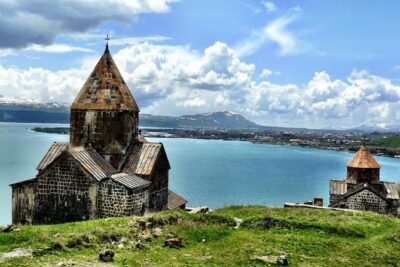
This day starts with the “pearl” of Armenia: Lake Sevan, known for its blue water and high-altitude setting. You visit Sevanavank Monastery, and the atmosphere there is usually about contrast: big water, hard stone, and quiet religious architecture sitting above it.
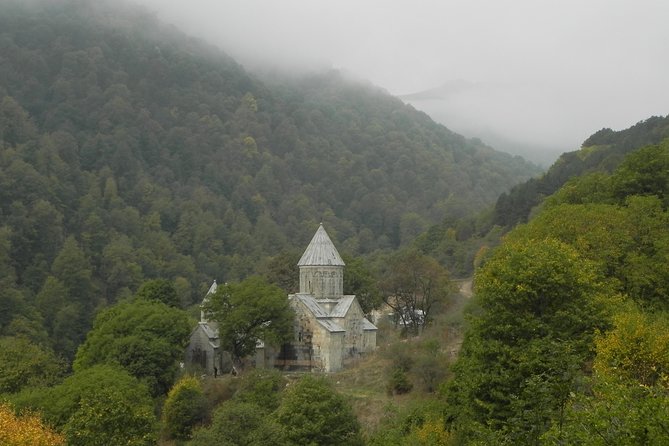
From there, you head into the medieval monastic story with Haghartsin Monastery. It’s described as a religious and educational center from the 10th to 13th centuries, and it’s set in nature near Dilijan. Even without being a “nature tour,” this stop helps you see monasteries as communities, not just buildings.
You finish the day at Goshavank Monastery, tied to Mkhitar Gosh, a key scholar and legal expert. That detail matters because it reframes the visit: you’re not only touring spirituality, you’re visiting scholarship and learning.
Drawback to plan for: monastery-heavy days can blur together if you don’t take time to slow down. I’d suggest using your guide’s explanations and focusing on one thing each stop is known for, rather than trying to memorize every architectural feature.
A few more Yerevan tours and Armenia day trips worth a look
Day 4: Gyumri’s old streets plus Ani-school monastery architecture
Day 4 is built around Gyumri, and this is where the trip starts to feel more human and less postcard-like. You walk Gyumri Main Square and along older streets where you can still picture the city’s traditional craft culture. The area also includes buildings that survived the 1988 earthquake, which gives the architecture added emotional weight.
The stop is especially good if you like bas-reliefs and colorful stonework. It’s not sterile “heritage”; it feels like a living city with scars and character.
Then you visit Marmashen Monastery on the left bank of the Akhurian River. It’s notable for being a strong surviving example of the Ani school of medieval Armenian architecture, and the complex includes five churches. This is the kind of place where architecture fans will be in their element.
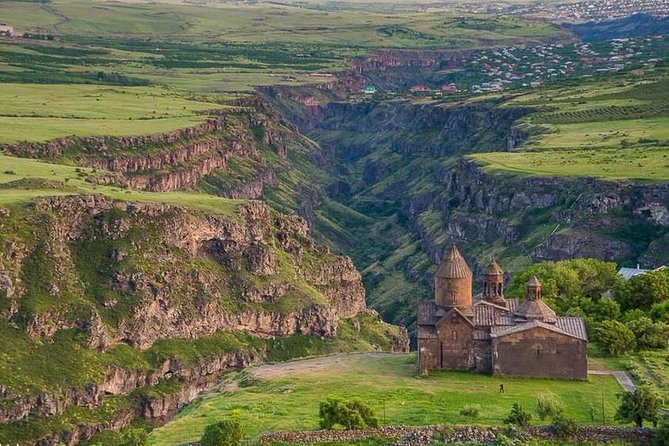
Finally, you head to Harichavank Monastery, set on a rocky cape on Mount Aragats’ slopes. The story of the chapel splitting from the cape after an earthquake, and now towering over the canyon, gives this stop a dramatic edge.
If you dislike days packed with multiple sites, this one might feel full. But if you want variety in architecture and setting, it’s a strong payoff day.
Day 5: Garni Temple viewpoint and Geghard’s cave-lance wonder
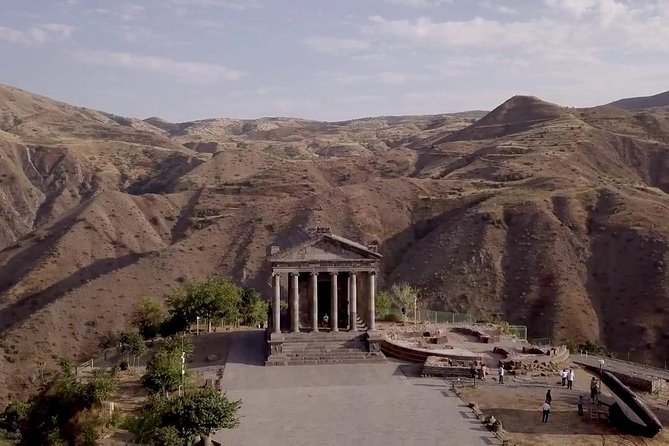
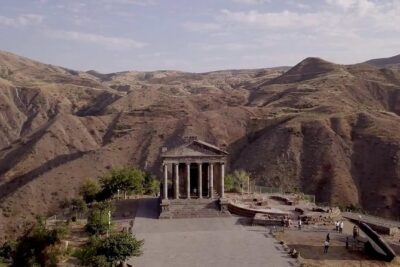
This is a big “two different worlds” day. First comes Garni Temple, famous as the only surviving temple in Armenia, with pagan and Hellenistic roots. It was devoted to the sun god Mithra, and you’re told it dates back to 76 B.C. The day includes a short stop at Charents Arch, where you get wide views over the Ararat valley and Mount Ararat.
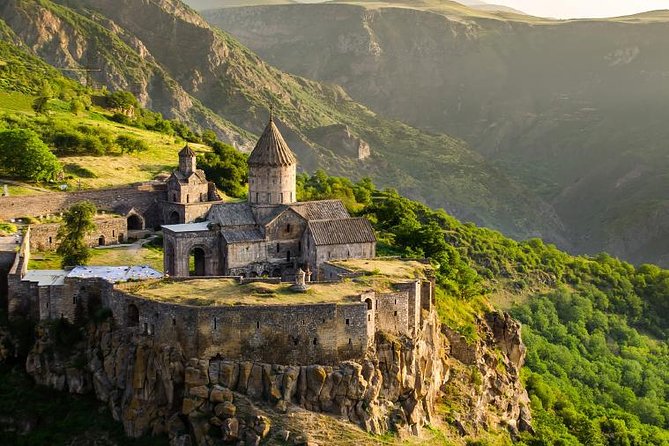
Then you visit Geghard Monastery, often described through its cave architecture and UNESCO status. The complex is tied to the biblical lance story—Geghard means lance in Armenian—and the monastery is built around rock-cut spaces and churches, including the main church dating to 1215. If you like sites where architecture and storytelling are fused, this is one of the most rewarding days in the week.
One practical note: cave monasteries and rock-cut sections can mean cool, dim interiors and uneven steps. Plan for slow movement and keep your camera ready, because some angles are best from specific viewpoints.
Day 6: The color churches near Ashtarak and Amberd’s fortress climb
Day 6 is a masterclass in Armenian church variety, especially around the Ashtarak area. You’ll visit Tsiranavor Church (apricot-colored), Karmravor Church (red-colored), and Spitakavor Church of Ashtarak (white-colored). The color naming isn’t just a gimmick; it helps you track different churches and time periods as you move through the complex of gorges and rocky edges.
You then add Ashtarak Bridge built in 1664. The practical part here is that it creates a natural pause. The area underneath and nearby is described as a good picnic place, so it’s a moment to sit and reset your legs.
After the bridge, you visit Saint Gevorg Church and Saghmosavank Monastery. Saghmosavank earns its name from the acoustics—its spiritual songs were meant to carry through the space. This is the day where you’ll feel the tour is not just about seeing; it’s also about understanding how people used these places.
You also go to Saint Mesrop Mashtots Cathedral in Oshakan, which is connected to the creator of the Armenian alphabet. That’s a smart placement in the itinerary because it anchors the week’s theme of learning—from medieval monasteries to a later national cultural landmark.
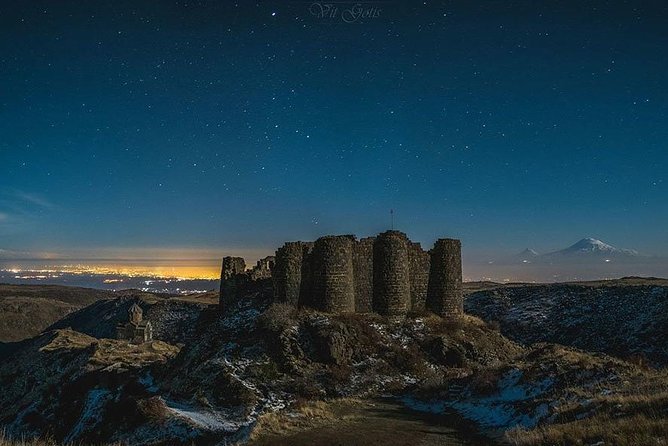
Then comes Amberd Fortress. It’s located around 2,300 meters above sea level, on Mount Aragats slopes. It’s a 10th-century fortress that Armenian kings used during wars. If you’re sensitive to altitude, take it slow and drink water as you go. The reward is a real sense of history tied to geography.
Day 7: Parajanov and Erebuni, then Vernissage for the last word on Armenia
The final day brings Armenia into the modern era without losing the sense of place. You start at the Parajanov Museum, dedicated to filmmaker Sergei Parajanov and his imaginative artistic works—assemblages, collages, drawings, film sketches, and dolls. This stop is a welcome change after days of stone and churches, and it gives you a clear feeling for Armenia’s creative voice.
Next is the Erebuni Museum, focused on the history of the foundation of Yerevan, connected to the Urartian fortress Erebouni on Arin Berd hill. This helps you understand why modern Yerevan is where it is, beyond just today’s neighborhoods.
Finally, you end at Vernissage Market, an open-air market where locals sell handmade works. It’s a good place to pick up small souvenirs that don’t feel mass-produced, and it gives you a last taste of everyday Armenian culture.
Pickup, group size, and tickets: what this tour handles for you
You get pickup offered, plus a mobile ticket. That combo matters because it reduces the “start-of-day friction” that can ruin the first hour of sightseeing.
The group size limit of 30 travelers is also a meaningful value point. You’re likely to have enough time for questions and to hear your guide when you’re standing near historic stones where the best viewpoints aren’t in one simple line.
Most travelers can participate, and the tour is described as near public transportation. So even if you’re not arriving with the pickup, you have options to get to the right area.
Price and value: is $885.13 a good deal for 7 days?
At $885.13 per person for about 7 days, the value comes from the combination of structure and included site access. Many of the major stops show admission tickets as included or free, which reduces the extra costs that often pop up on DIY itineraries.
You also get multiple UNESCO World Heritage sites and major heritage anchors in a single week. Instead of paying for individual entries while also managing timing and travel between regions, you’re paying for a guided sequence that does the timing for you.
The other value angle is mental energy. This itinerary covers a lot of ground in a planned order. If you’d rather spend your time watching the churches and reading the stories instead of planning the route, the price starts to make sense fast.
Who should book, and who should think twice
This tour is a good match if you:
- want a high-clarity plan and don’t want to piece together day trips
- enjoy monasteries, fortresses, and history that you can see in stone
- like a balanced day mix: architecture, museums, and one or two lighter cultural stops like markets or tastings
- travel with kids or in a mixed group; the reviews you’ll find emphasize that children stayed interested, and guides stayed engaged and helpful
Think twice if you:
- want long, slow afternoons with no rushed transitions
- dislike church and monastery settings as a daily theme
- are very sensitive to altitude, since Amberd is listed at about 2,300 meters
Should you book this 7-day Armenia loop with Ari Tour?
If you want a strong, guided first trip to Armenia, I’d book it. The itinerary gives you a real spread: Yerevan’s viewpoints and culture, ancient church history, lake-and-forest monastery days, the architecture of Gyumri, the pagan-and-cave contrast of Garni and Geghard, and a finishing combo of Parajanov and Vernissage.
The main reason to hesitate is only pacing. If you’re the type who needs downtime, plan to go slower on your free time around the included stops. Otherwise, this is the kind of week where you come home with more than photos—you come home with a clearer story of Armenia.
FAQ
How long is the tour?
It’s listed as 7 days (approximately).
What’s the starting location for this 7-day Armenia tour?
The tour is centered around Yerevan, Armenia.
Is pickup included?
Pickup is offered.
Are tickets included or handled for the attractions?
A mobile ticket is provided, and the tour includes admission tickets for many stops (with some stops listed as free).
What language is the tour offered in?
It’s offered in English.
How big is the group?
The maximum group size is 30 travelers.
Is free cancellation available?
Yes. You can cancel up to 24 hours in advance for a full refund.
More Tours in Yerevan
- Group Tour: Garni, Symphony of Stones, Geghard, Lavash Baking★ 5.0 · 1,042 reviews
- Group Tour: Lake Sevan (Sevanavank), Dilijan (Goshavank, Haghartsin)★ 5.0 · 1,036 reviews
- Group tour: Khor Virap, Noravank, Areni Winery and Cave★ 5.0 · 651 reviews
- Group Tour: Tsaghkadzor (Kecharis, Ropeway), Lake Sevan, Trout barbecue treat★ 5.0 · 511 reviews
- Group Tour: Khor Virap, Noravank, Tatev monasteries (wayback on Ropeway)★ 5.0 · 506 reviews
More Tour Reviews in Yerevan
- Group Tour: Garni, Symphony of Stones, Geghard, Lavash Baking★ 5.0 · 1,042 reviews
- Group Tour: Lake Sevan (Sevanavank), Dilijan (Goshavank, Haghartsin)★ 5.0 · 1,036 reviews
- Group tour: Khor Virap, Noravank, Areni Winery and Cave★ 5.0 · 651 reviews
- Yerevan: Garni, Geghard, Symphony of Stones & Lavash Baking★ 5.0 · 589 reviews
- Group Tour: Tsaghkadzor (Kecharis, Ropeway), Lake Sevan, Trout barbecue treat★ 5.0 · 511 reviews
More Multi-Day Armenia Tours & Packages
- Group Tour: Must see of Georgia in 2 days from Yerevan★ 5.0 · 74 reviews
- The Great Beauty of Armenia: 7-Day Culture and Cuisine Tour★ 5.0 · 35 reviews
- 3 day private tours in Armenia from Yerevan★ 5.0 · 19 reviews
- Gastro tour package in Armenia★ 5.0 · 17 reviews
- 6 days in Armenia: Garni, Tatev, Echmiadzin, Sanahin, Haghpat★ 5.0 · 12 reviews
Still deciding? Here are more Yerevan tours and Armenia day trips we have written up





Multi-Day Armenia Tours & Packages, compared.
 ★ 5.0Group Tour: Must see of Georgia in 2 days from YerevanFrom $18674 reviews
 ★ 5.0The Great Beauty of Armenia: 7-Day Culture and Cuisine TourFrom $75035 reviews
 ★ 5.03 day private tours in Armenia from YerevanFrom $55519 reviews
 ★ 5.0Gastro tour package in ArmeniaFrom $2,50017 reviews
 ★ 5.06 days in Armenia: Garni, Tatev, Echmiadzin, Sanahin, HaghpatFrom $85512 reviews
 ★ 5.0Family package for 7 daysFrom $2,07010 reviews
 ★ 5.02 days and 1 night private tour to Khor Virap, Areni, Noravank, Goris, Tatev.From $4009 reviews
 ★ 5.0Armenia – Tbilisi 3 days, 2 nights from YerevanFrom $8277 reviews
Browse the lists this tour appears in