
Reviewed · YEREVAN PHOTOGRAPHY TOURS & PHOTOSHOOTS
Urbex photo tour in Armenia
Abandoned ruins plus real Armenian monuments. This Urbex photo tour in Armenia pairs off-the-map photography with high-impact cultural stops, from Ararat-view monasteries to cave churches. I love that it’s truly all-inclusive on the practical side: a 3-star hotel and meals built into the schedule, so you’re not constantly sorting logistics while you’re chasing shots.
I also like the small-group feel (up to 10 people) and the smooth handoffs, including airport pickup and an air-conditioned vehicle. The main drawback to consider: the Urbex locations are intentionally not specified, so you have to be flexible if you’re hoping for one exact building type or facade.
In This Review
- Key Things That Make This Tour Special
- Armenia Urbex Photo Tour: Why This Mix Works
- Day 1 in Yerevan: Airport Pickup and a Simple First Evening
- Khor Virap to Noravank: Ararat Views and Monastery Photo Stops
- Yeghegnadzor and the Urbex Day: Wine Lunch, Then Abandoned Factory Time
- Photo tip for days like this
- Selim Pass Caravanserai to Sevanavank: Silk Road History Meets Lake Light
- Haghpat and Sanahin UNESCO Days: Stone Carving That Rewards Patience
- Vanadzor’s Soviet Vibe: Pioneer Camp Photo Tour Energy
- Amberd Fortress and Tegher Monastery: High Elevation Stone
- Garni Pagan Temple to Geghard Cave Churches: Closing on Basalt and Carved Rock
- Price and Value: What $2,301.32 Includes (and What That Really Means)
- How to Prepare for Urbex Days Without Losing Your Shot
- Should You Book This Armenia Urbex Photo Tour?
- FAQ
- What time does the tour start, and where do we meet?
- Is pickup included?
- How big is the group?
- How many hotel and meal days are included?
- Are entrance tickets included?
- Do I get the exact Urbex locations in advance?
- Is this tour refundable if I cancel?
- Is the tour suitable for most people and can service animals travel?
Key Things That Make This Tour Special
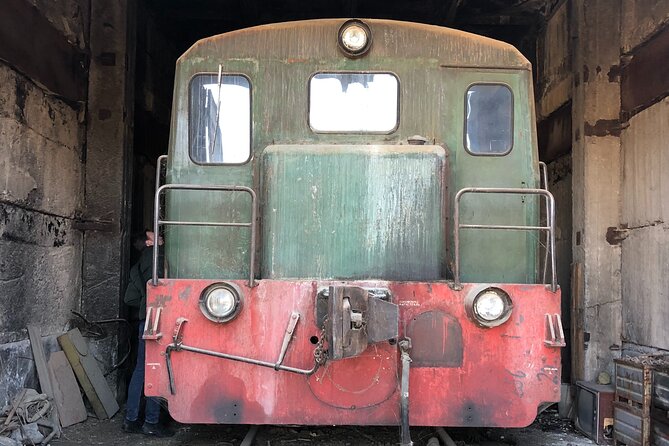
- Secretive Urbex planning: locations are intentionally kept off your map so you can focus on the shoot.
- Real Armenian variety: monasteries, fortress ruins, and pagan sites show up between the abandoned buildings.
- Small group size: up to 10 people keeps the pace manageable and the photo time usable.
- Meals and hotel included: breakfast, lunch, and most dinners take money and decision fatigue off your plate.
- Guide team known for organization: Nvard of Central Tour Armenia is highlighted as patient and well-informed, with Hanzebeeld involved in organizing the Urbex side.
- UNESCO on schedule: Haghpat and Sanahin aren’t just filler stops.
Armenia Urbex Photo Tour: Why This Mix Works
If you’re into abandoned places, Armenia can feel like a cheat code. You get weathered institutions, factories, and other ruins that photograph like a movie set. But here’s what makes this tour more than a straight Urbex hit: you also move through Armenia’s big stone history—monasteries, fortresses, and UNESCO churches—so your camera roll isn’t only darkness and dust.
This matters for your own planning. A pure Urbex day can start to feel repetitive fast. Here, the rhythm changes. You’ll shoot a ruin, then swing to a church carved in tuff stone or a cave complex, then return to photography with fresh light, different textures, and new angles. It’s a good way to keep your photos varied and your energy from running on fumes.
And because the tour includes a 3-star hotel plus meals through the trip, you don’t lose half your day hunting food or figuring out where to sleep. That’s not glamorous, but it’s what makes a photo trip actually work.
More photography walks and photoshoots around Yerevan
- Yerevan city tour with drinks in a classic car with photography
★ 5.0 · 41 reviews - Retro KGB Tour: A Volga 21 Adventure in Yerevan’s Soviet Past with photography
★ 5.0 · 29 reviews - Photo tour in Yerevan
★ 5.0 · 6 reviews - Photoshoot in Armenian garments
★ 5.0 · 4 reviews
Day 1 in Yerevan: Airport Pickup and a Simple First Evening
The tour starts with a meeting at Zvartnots International Airport with a transfer to your hotel, and the scheduled start time is 9:00 am. The practical win: you land, get moved, and don’t spend your first hours improvising.
Dinner on the first evening is noted as optional rather than included. That’s worth knowing so you don’t assume you’ll be fed immediately after arrival. If you’re coming in hungry, plan either a quick meal near the restaurant meeting point or ask your group leader what’s easiest that night.
Khor Virap to Noravank: Ararat Views and Monastery Photo Stops
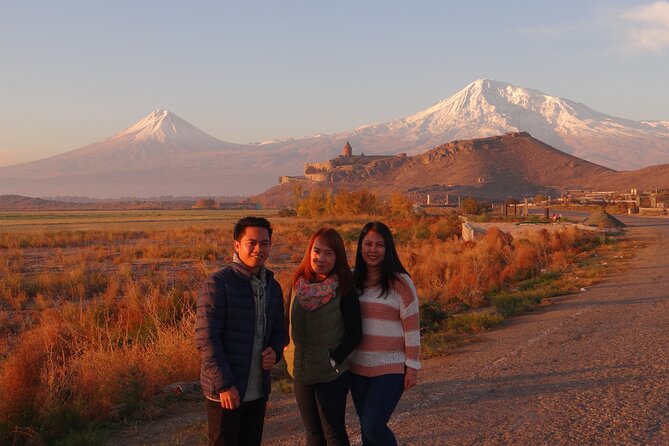
Day two begins with Khor Virap, one of Armenia’s best-known pilgrimage sites. The story matters here: it’s associated with Saint Gregory the Illuminator, said to have been imprisoned in a pit for 13 years before curing King Tiridates III. If you like photographing religious sites, you’ll likely enjoy the way history and symbolism are built into the architecture and the setting.
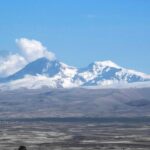
The other reason this stop is a must for your camera: the view of Mount Ararat is a major draw. Even if weather changes your sightline, you’ll still get a strong sense of place—wide sky, stone edges, and monastery lines that work well at sunrise/sunset-style contrast.
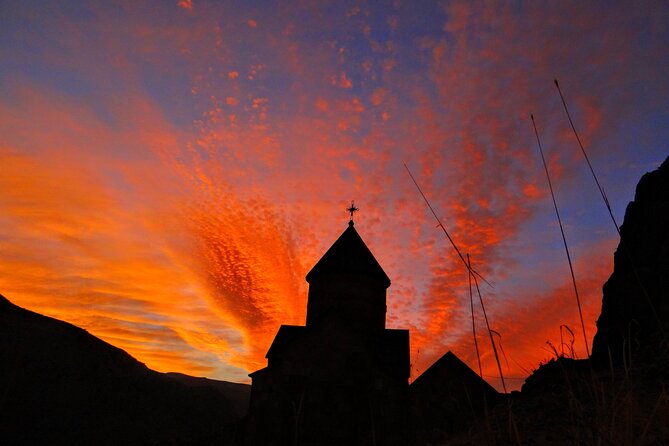
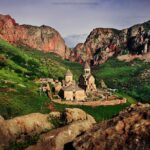
Next up is Noravank Monastery in a narrow gorge area. This is the kind of stop where details reward slow looking: decorative motifs and intricate carvings on the exterior walls make great close-ups. The gorge setting also gives you a natural “frame” for compositions, which is handy when you want texture shots rather than only wide angles.
Yeghegnadzor and the Urbex Day: Wine Lunch, Then Abandoned Factory Time
After the monastery pair, you drive through Vayots Dzor—rugged hills and valley roads that tend to shift your light as you move. The Urbex portion is where the day really turns into a photo-focused outing.
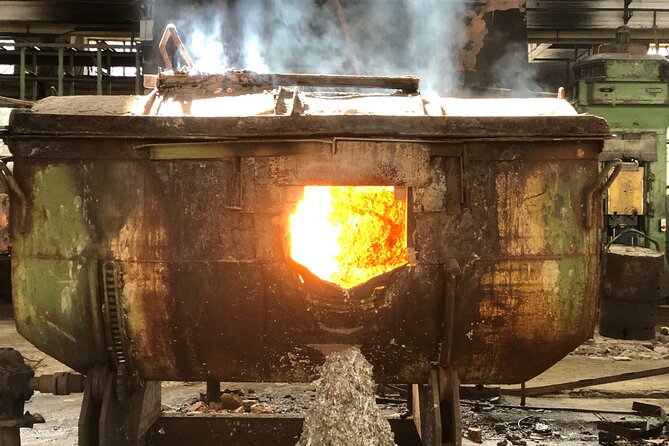
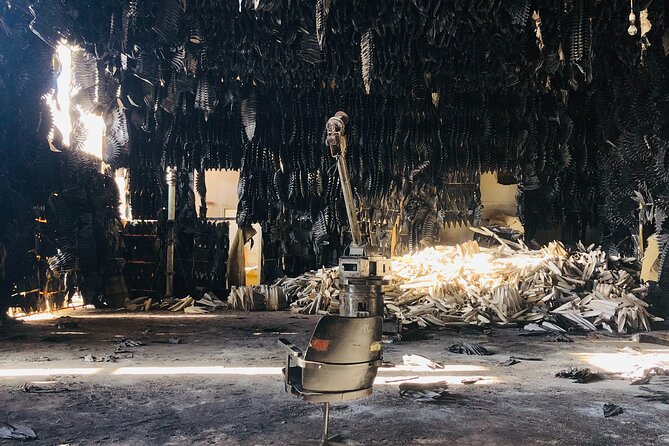
You’ll reach the Urbex site without the exact location being spelled out in advance. That’s intentional: Urbex often depends on keeping places protected. For you, the practical takeaway is simple—don’t plan your photography like you’re walking into a known “attraction ruin.” Instead, be ready for what the site offers: broken industrial lines, peeling walls, collapsed interiors, and whatever mood the building gives you.
Lunch is in Yeghegnadzor at a gastro yard with wine tasting, followed by a visit to an abandoned factory for photography. This is a smart structure for a photo day: you refuel and get a local flavor break, then move back into a controlled block of shooting time.
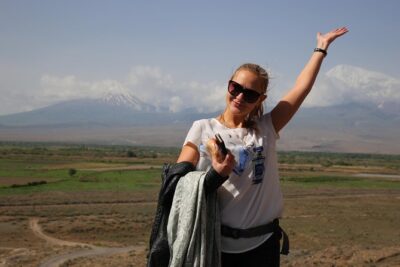
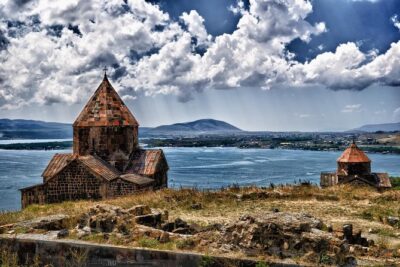
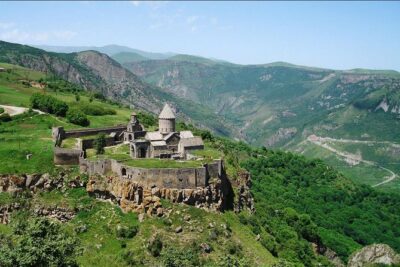
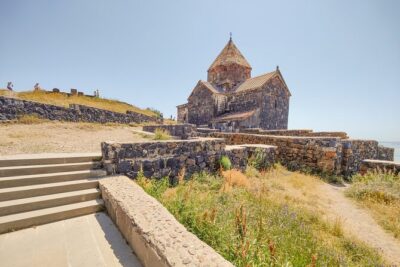
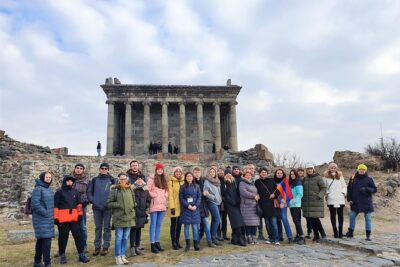
Photo tip for days like this
If you want variety in one ruin, shoot in layers: wide compositions first, then walk for details (doors, signage remnants, cracked concrete seams, window frames). It’s the difference between one “cool” picture and a set that looks like you spent a full day there.
Selim Pass Caravanserai to Sevanavank: Silk Road History Meets Lake Light
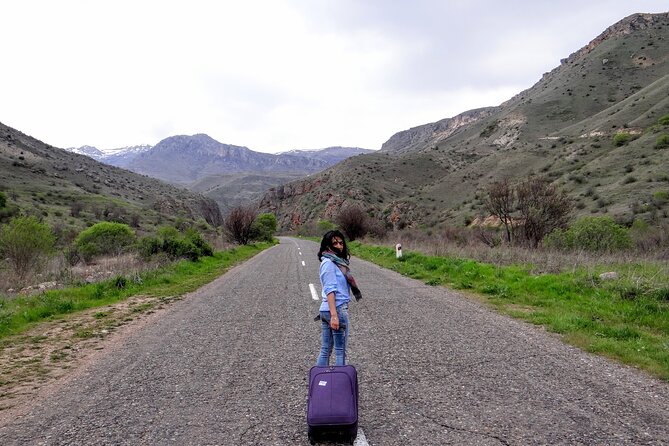
On day three, the schedule shifts into Silk Road territory with the Orbelian Caravanserai near Vardenyats Pass (Selim Pass). Caravanserais were built as resting places for traders and animals, and this one is described as a 14th-century structure built by the Orbelian princes. You’ll see the classic layout idea—rooms around a rectangular courtyard—with a chapel and a well to serve travelers.
For photography, it’s useful because caravanserai architecture gives you repeatable composition shapes. Courtyards, doorway rhythms, and stone textures tend to photograph consistently even when clouds roll in.
Then you head to Sevanavank Monastery, on the northwestern shore of Lake Sevan. The complex includes two churches and khachkars (Armenian cross-stones), and it’s tied to a 9th-century origin. The real draw is the setting: the monastery overlooks Lake Sevan, which often means bright reflective light and a strong horizon line.
That matters because it breaks the visual tone of the abandoned-day shots. It’s also a place where your wide shots and your detail shots can both work—khachkars and church stone patterns for close-ups, lake vistas for context.
Haghpat and Sanahin UNESCO Days: Stone Carving That Rewards Patience
The tour doesn’t treat UNESCO stops as quick “drive-by” points. Day three includes Haghpat Monastery in Lori Province, designated a UNESCO World Heritage Site. The site is known for unique medieval architecture, including the main church of St. Nishan with intricate carvings and frescoes, plus a bell tower and a library. If you enjoy architectural photography, this is the kind of location where you’ll want to slow down and rotate around buildings rather than only aim straight-on.
You’ll also have an overnight stay and dinner in the village area, which can be a nice reset after a long day of moving. In practice, it keeps your schedule from feeling like constant departure gates and no time to breathe.
Day four continues with Sanahin Monastery, also UNESCO-listed. It was founded in the 10th century and became an important learning center, with multiple churches and buildings made with local tuff stone. The Gavit (a meeting hall/vestibule) is one of the standout architectural elements. The churches noted here include Surb Astvatsatsin and Surb Amenaprkich.
Then comes the Mikoyan Brothers Museum in Sanahin. This one adds a different layer: Soviet-era history through Anastas Mikoyan and Artem Mikoyan, tied to Soviet politics and aviation. The museum experience is long enough (about four hours) that you can settle in rather than rushing through it.
Even if you’re not a Soviet-history person, it’s a good contrast day after centuries of church stone.
Vanadzor’s Soviet Vibe: Pioneer Camp Photo Tour Energy
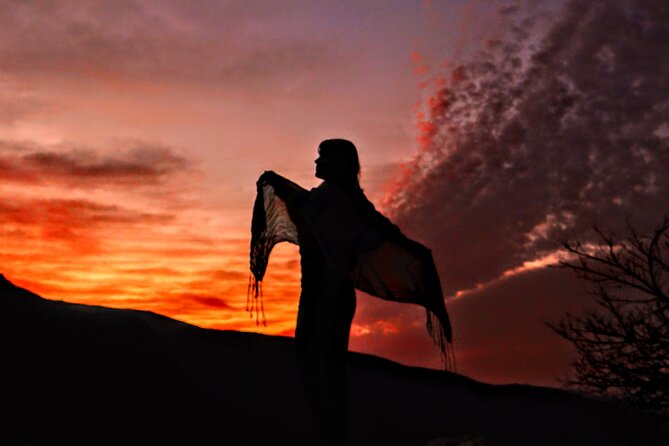
Day five focuses on Vanadzor, Armenia’s third-largest city, in Lori Province. It’s described as a cultural and economic hub with parks and several museums. If you want city life flavor between rural monasteries, this helps.
The photo time here is tied to Soviet pioneer camps—summer camps for children designed to promote socialist ideology and physical fitness. The tour format is a phototour block, which means you’re not just touring a museum and leaving. You’re hunting visual angles in spaces that carry that Soviet-era style.
This is also a good day to shoot “in-between” details: signage, building shapes, stair lines, and textures. Pioneer camp sites can photograph in a way that feels both documentary and cinematic, especially when light hits peeling paint and worn cement.
Amberd Fortress and Tegher Monastery: High Elevation Stone
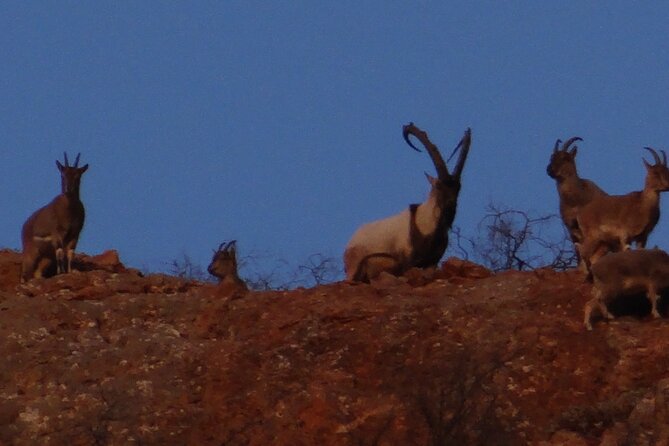
Day six goes up in elevation with Amberd Fortress, located at about 2,300 meters. The fortress is described as medieval, built in the 7th century by Vahan Mamikonian and expanded over time. It served as a strategic stronghold across multiple invasions, and there’s also a church built in the 11th century on site.
Photography at elevation can be very rewarding because the air often feels crisper and light can change quickly. The quick caution: give yourself time to adjust and don’t run at full speed right off the bus. Stone ruins look best when you’re steady, not when you’re rushing to beat a fog bank.
Next is Tegher Monastery, a hilltop site dating to the 13th century. It’s known for architecture and religious significance, with several preserved structures and khachkars. Even when parts are damaged, sites like this still give strong composition opportunities—especially for shots that show placement on the hill and how the stone sits against the sky.
Garni Pagan Temple to Geghard Cave Churches: Closing on Basalt and Carved Rock
The final day ends on two of Armenia’s most iconic stone worlds.
First is Garni Temple, described as a well-known pagan temple symbol in pre-Christian Armenia, later converted into a royal summer house. If you like contrast between ancient religion and later reuse, this stop is built for it. It gives you clean geometry and strong daylight angles.
Then you’ll visit the Symphony of the Stones in Garni Gorge. This is the basalt column formation that makes a musical sound when struck. For photography, it’s a natural “pattern” location: repeating columns, strong shadows, and a built-in sense of scale.
After Garni, you head to Geghard Monastery Complex, a UNESCO-listed site. What makes Geghard special is the mix of churches situated in caves and those dug into the surrounding rock face. The result is a set of compositions that look carved by time itself, not just built by humans. Your angles will shift constantly because the surfaces aren’t flat.
Finally, you return to Yerevan.
Price and Value: What $2,301.32 Includes (and What That Really Means)
This tour is priced at $2,301.32 per person and runs about a week. That’s not a budget impulse buy. So here’s how to judge the value in a practical way.
You’re paying for three big things that are hard to DIY without stress:
- Time and transport: you’re moved between multiple regions—Yerevan, Vayots Dzor, Lake Sevan area, Lori, Aragatsotn, and back.
- Accommodation and meals: a 3-star hotel and included breakfasts/lunches/dinners (with the first evening dinner listed as optional).
- A Urbex-focused itinerary with structure: instead of random ruin hunting, your days are built around scheduled photo blocks and guided stops.
The other value lever is group size and format. With a cap of 10 travelers, you usually get easier coordination. And since the schedule is tight and photo time is time-sensitive, avoiding chaos has real value when you’re traveling with a camera.
If you already love religious/UNESCO sites and you don’t want to plan routes, the price starts to make sense. If you only want Urbex and you don’t care about monasteries or Soviet history museums, you might feel like you’re paying for more non-urban culture than you personally need.
How to Prepare for Urbex Days Without Losing Your Shot
Because Urbex locations are intentionally not specified, you should pack and plan as if you’ll face unknown interiors and uneven exteriors. Armenia’s ruins can mean broken floors, dusty air, tight spaces, and stairways that don’t look friendly on the way down.
Here are smart, low-risk moves you can make:
- Wear closed-toe shoes you trust on uneven surfaces.
- Bring a small flashlight or phone light for shadowy interiors.
- Use a camera strap you like—Urbex days often mean sudden repositioning.
- If you shoot video, keep one “bailout” lens ready in case access is constrained by the site layout.
Also, keep a calm attitude. Urbex is photography, but it’s still a real place with real hazards. You’ll get better results by moving slowly, watching your footing, and letting the building’s textures decide the final framing.
Should You Book This Armenia Urbex Photo Tour?
Book it if you want an Armenia photo trip that doesn’t treat Urbex as the only story. This works best for you if you like variety—abandoned factories and Soviet-era spaces mixed with UNESCO monasteries like Haghpat and Sanahin, plus Garni and Geghard.
Skip or rethink it if you’re only interested in one narrow type of abandoned building and you get impatient with cultural stops. Also, if you hate uncertainty, remember the Urbex locations aren’t listed ahead of time.
One last practical note: this is led as a coordinated Central Tour Armenia experience with Nvard referenced as central to planning and support, with Hanzebeeld involved in organizing the Urbex side. That combination matters when you’re trying to move fast, but safely, through places your camera can’t afford to ignore.
FAQ
What time does the tour start, and where do we meet?
You meet at Zvartnots International Airport, with a scheduled start time of 9:00 am.
Is pickup included?
Pickup/transfer is offered, and the tour starts with an airport meeting and transfer to your hotel.
How big is the group?
The maximum group size is 10 travelers.
How many hotel and meal days are included?
The trip includes breakfast (6), lunch (6), and dinner (6). Dinner for the first evening is listed as optional.
Are entrance tickets included?
Some stops are marked with admission ticket included, while others are marked free. Your schedule shows admissions handled as part of the visit plan.
Do I get the exact Urbex locations in advance?
No. The Urbex site locations are not specified in advance, because keeping them secret is part of Urbex principles.
Is this tour refundable if I cancel?
No. This experience is non-refundable and cannot be changed for any reason.
Is the tour suitable for most people and can service animals travel?
Most travelers can participate, and service animals are allowed.
More Tours in Yerevan
- Group Tour: Garni, Symphony of Stones, Geghard, Lavash Baking★ 5.0 · 1,042 reviews
- Group Tour: Lake Sevan (Sevanavank), Dilijan (Goshavank, Haghartsin)★ 5.0 · 1,036 reviews
- Group tour: Khor Virap, Noravank, Areni Winery and Cave★ 5.0 · 651 reviews
- Group Tour: Tsaghkadzor (Kecharis, Ropeway), Lake Sevan, Trout barbecue treat★ 5.0 · 511 reviews
- Group Tour: Khor Virap, Noravank, Tatev monasteries (wayback on Ropeway)★ 5.0 · 506 reviews
More Tour Reviews in Yerevan
- Group Tour: Garni, Symphony of Stones, Geghard, Lavash Baking★ 5.0 · 1,042 reviews
- Group Tour: Lake Sevan (Sevanavank), Dilijan (Goshavank, Haghartsin)★ 5.0 · 1,036 reviews
- Group tour: Khor Virap, Noravank, Areni Winery and Cave★ 5.0 · 651 reviews
- Yerevan: Garni, Geghard, Symphony of Stones & Lavash Baking★ 5.0 · 589 reviews
- Group Tour: Tsaghkadzor (Kecharis, Ropeway), Lake Sevan, Trout barbecue treat★ 5.0 · 511 reviews
More Yerevan Photography Walks & Photoshoots
- Yerevan city tour with drinks in a classic car with photography★ 5.0 · 41 reviews
- Retro KGB Tour: A Volga 21 Adventure in Yerevan’s Soviet Past with photography★ 5.0 · 29 reviews
- Photo tour in Yerevan★ 5.0 · 6 reviews
- Photoshoot in Armenian garments★ 5.0 · 4 reviews
- Photography tour in Yerevan (Yerevan city tour)★ 4.5 · 3 reviews
Still deciding? Here are more Yerevan tours and Armenia day trips we have written up



Yerevan Photography Tours & Photoshoots, compared.
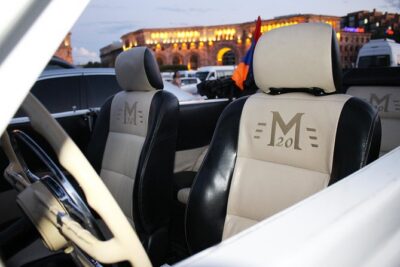 ★ 5.0Yerevan city tour with drinks in a classic car with photographyFrom $4341 reviews
 ★ 5.0Retro KGB Tour: A Volga 21 Adventure in Yerevan’s Soviet Past with photographyFrom $5629 reviews
 ★ 5.0Photo tour in YerevanFrom $776 reviews
 ★ 5.0Photoshoot in Armenian garmentsFrom $974 reviews
 ★ 4.5Photography tour in Yerevan (Yerevan city tour)From $293 reviews
Browse the lists this tour appears in